-

Current Small Business Trends in Canada
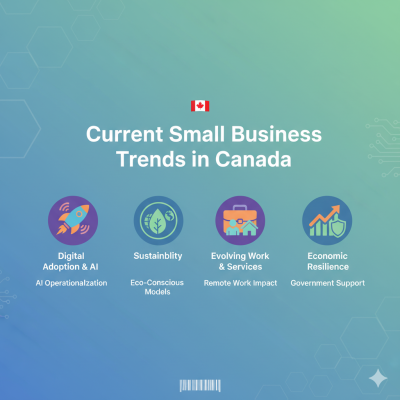
The small business landscape in Canada, which makes up over 98% of all businesses, is currently being shaped by a dynamic mix of technological transformation, a strong push for sustainability, and necessary adjustments to economic and labour market shifts.
🚀 Digital Adoption and AI Integration
The most impactful trend is the accelerating pace of digital adoption and the rise of Artificial Intelligence (AI) among Small and Medium-sized Enterprises (SMEs).
-
AI is Operationalizing: While a large majority of small businesses use some digital tools, a growing number are moving beyond basic use to integrate AI. Over 70% of Canadian SMEs are now using AI and/or Generative AI tools to drive efficiency and growth, with a focus on areas like customer service chatbots, automated marketing, and content creation.
-
Productivity Gains: Businesses are seeing tangible returns on their tech investments, reporting an average 29% boost in productivity in the first year after significant digital adoption. For every dollar invested, digitally mature businesses are seeing an even higher return.
-
Persistent Gaps: Despite the growing interest, many firms are still in the early stages of full integration, hindered by concerns over cost, cybersecurity, and the need for employee upskilling.
🌿 Sustainability and Consumer Values
Canadian consumers are increasingly prioritizing ethical and eco-friendly practices, pushing small businesses to embed sustainability into their core operations.
-
Eco-Conscious Business Models: This involves everything from reducing waste and adopting sustainable packaging to sourcing locally to strengthen supply chains. Programs like Green Economy initiatives support SMEs in lowering their environmental impact.
-
Emerging Green Sectors: This trend fuels growth in sectors like renewable energy consulting, green technology implementation, and businesses focused on the circular economy (e.g., waste management and remediation).
💼 Evolving Work and Service Industries
Shifts in how Canadians work and live are creating new opportunities, particularly in service-based industries.
-
Remote Work Impact: The sustained higher rate of remote and hybrid work has a dual effect: it has reduced the demand for traditional downtown office space (leading to adaptive reuse projects in commercial real estate) but has spurred growth in home improvement services, digital fitness/wellness, and in-home personal services (like cleaning and beauty).
-
High-Demand Services: Industries with low overhead and strong, consistent demand, such as cleaning services, home improvement/renovation, tutoring, and pet care services, remain highly profitable and accessible entry points for new small businesses.
-
Subscription Economy: Subscription box services for niche products continue to thrive, offering predictable revenue streams and strong customer retention for e-commerce-focused SMEs.
📉 Economic Headwinds and Resilience
Small businesses are navigating ongoing economic pressures through strategic planning and leveraging government support.
-
Inflation and Uncertainty: Persistent inflation and slower GDP growth are challenging many SMEs. In response, businesses are focusing on financial responsibility, diversifying supply chains, and building resilience.
-
Government Support: Federal and provincial programs, like the Canada Digital Adoption Program (CDAP), are crucial in offering grants and interest-free loans to help small firms finance their digital and technological upgrades, thereby enhancing long-term competitiveness.

-