-

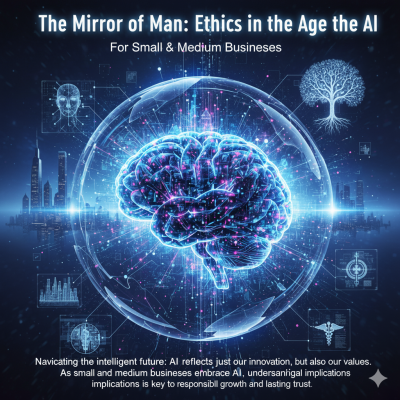
Navigating the intelligent future: AI reflects not just our innovation, but also our values. As small and medium businesses embrace AI, understanding its ethical implications is key to responsible growth and lasting trust.
The Mirror of Man: Ethics in the Age of AI for SMBs
Artificial Intelligence (AI) is no longer just for tech giants. Small and medium businesses (SMBs) are rapidly adopting AI tools to streamline operations, enhance customer service, and gain competitive edges. From AI-powered chatbots handling inquiries to intelligent analytics optimizing marketing campaigns, the benefits are clear.
However, as AI becomes more integrated into our daily business practices, it begins to act as a “Mirror of Man.” It reflects not just our technological prowess, but also our inherent biases, values, and ethical considerations. For SMBs, understanding and proactively addressing these ethical dimensions is not just about compliance; it’s about building trust, ensuring fairness, and fostering long-term success.
Why Ethics in AI Matters for Your SMB:
-
Bias and Fairness: AI systems learn from data. If that data contains historical biases (e.g., in hiring, loan approvals, or customer targeting), the AI will perpetuate and even amplify them. This can lead to unfair treatment of customers or employees, damaging your reputation and potentially inviting legal challenges. For an SMB, a single misstep can have a disproportionate impact.
-
Transparency and Explainability: Can you explain why your AI made a particular decision? If an AI system denies a loan application or flags a customer as high-risk, customers and regulators increasingly expect an explanation. “The computer said so” is no longer an acceptable answer. SMBs need to choose AI solutions where the decision-making process isn’t a complete black box.
-
Data Privacy and Security: AI thrives on data. As your SMB collects and processes more information, the ethical responsibility to protect that data becomes paramount. Ensuring robust data security and transparent data usage policies is crucial to maintain customer trust and comply with regulations like GDPR or CCPA.
-
Job Displacement and Workforce Impact: While AI can boost productivity, it also raises questions about its impact on human jobs. SMBs have an ethical responsibility to consider how they will reskill, redeploy, or support employees whose roles might change due to AI automation. A human-centric approach can turn potential disruption into an opportunity for growth and employee development.
-
Accountability: When an AI system makes a mistake, who is responsible? For an SMB, clarifying accountability for AI-driven outcomes is vital. This means having clear internal policies and oversight mechanisms.
Practical Steps for Your SMB:
-
Educate Yourself and Your Team: Understand the basics of AI ethics.
-
Choose Responsible Vendors: Partner with AI solution providers who prioritize ethical AI development and can explain their algorithms.
-
Audit Your Data: Regularly check the data your AI uses for potential biases.
-
Implement Human Oversight: Don’t let AI run completely autonomously. Maintain human review and intervention points.
-
Develop Internal Guidelines: Create simple, clear policies for how AI should be used within your business.
Embracing AI ethically is not just a moral imperative; it’s a strategic advantage. It builds customer loyalty, attracts top talent, and safeguards your business’s reputation in an increasingly AI-driven world. By looking into the “Mirror of Man” that AI presents, SMBs can ensure their technological advancements reflect their best values.

-